
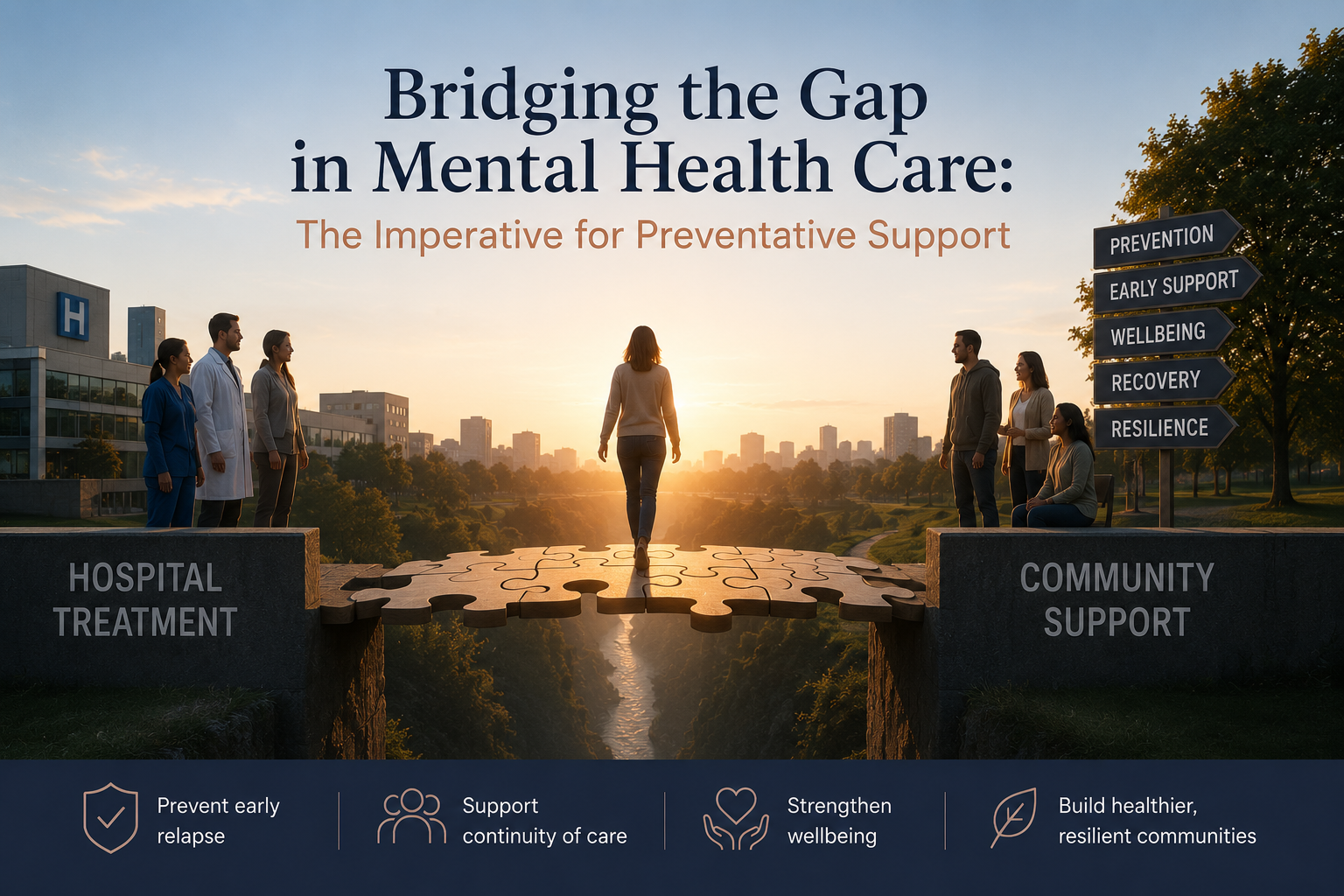
In the realm of mental health, the prevalent approach has often been reactive rather than proactive. Traditional mental health services have largely focused on managing crises as they occur, relying on what many critique as the ‘bandaid trick’—addressing the symptoms without tackling the underlying causes of mental health issues. This method, while necessary in acute situations, neglects the critical aspect of prevention, leading to a cyclical pattern of relapse and rehospitalization.
The reality of this flawed approach is evident in the statistics: a significant portion of individuals discharged from mental health facilities find themselves in need of re-admission within a short period. Specifically, studies indicate that approximately 20% of patients experience a relapse within 60 days post-discharge (Smith & Jones, 2018). The root of this problem lies in the insufficient emphasis on preventative measures that not only manage the immediate concerns but also equip individuals with tools and strategies to maintain their mental health in their everyday environments.
Eunity LTD, recognizing this significant gap in the mental health care continuum, has positioned itself uniquely by focusing primarily on relapse prevention. At the heart of Eunity LTD’s mission is a transformative approach to mental health care that prioritizes sustainable recovery. By providing transitional care, Eunity LTD bridges the daunting gap between inpatient care and community reintegration.
One of the stark realities facing mental health care is the extended waiting periods for appointments with psychiatrists and psychologists. This delay is not just a lapse in service delivery but a critical period during which individuals are vulnerable to relapse. Eunity LTD addresses this gap by offering immediate, personalized counseling services post-discharge. This not only prevents potential relapses but also significantly reduces the burden on acute care facilities and emergency services, thereby lowering government health service costs in the process.
Eunity LTD’s service model is built on a foundation of preventative strategies. Through interventions such as Cognitive Behavioral Therapy (CBT), motivational interviewing, and educational workshops, clients are equipped with essential self-management tools. These tools empower individuals to recognize potential triggers, employ coping strategies proactively, and sustain their mental well-being. This proactive approach not only enhances the individual’s quality of life but also alleviates the systemic pressures on mental health services by reducing the frequency and necessity of acute crisis management.
Moreover, Eunity LTD extends its preventative strategies beyond the individual to involve family and community, recognizing that mental health recovery is often bolstered by a supportive network. This holistic approach ensures that the individual is not navigating the recovery journey alone but is supported by an ecosystem tailored to foster long-term mental health stability.
The uniqueness of Eunity LTD’s services lies in its seamless integration of clinical expertise with compassionate, client-centered care. By addressing the gaps left by traditional mental health services, Eunity LTD not only aids in the immediate transition from hospital to home but also contributes to a broader cultural shift towards preventative mental health care. In doing so, it sets a new standard for mental health services—one that is desperately needed in today’s healthcare landscape.
References
– Smith, J., & Jones, M. (2018). *Recidivism in Post-Discharge Mental Health Treatment: Patterns and Prevention*. Journal of Mental Health Policy.